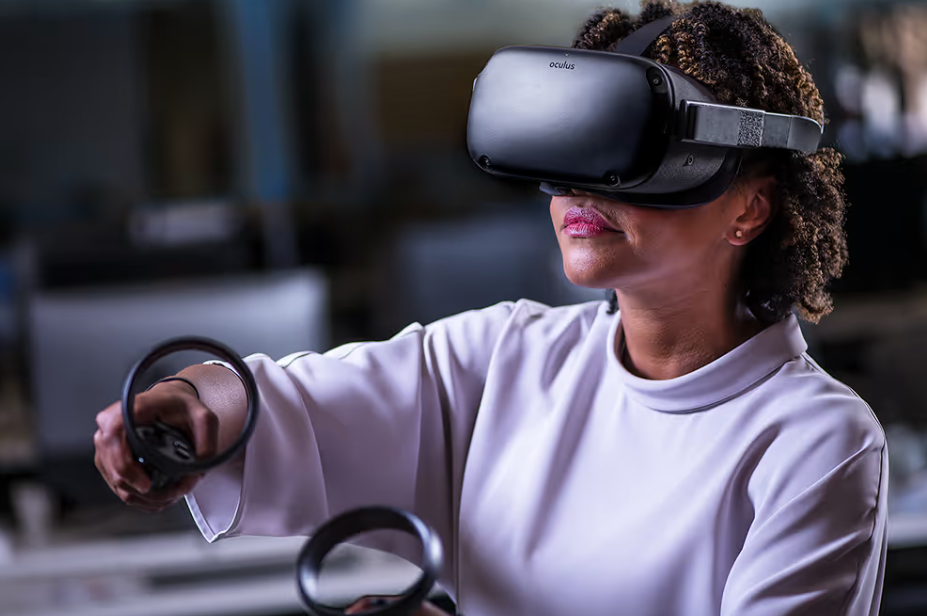
Virtual Reality accelerates business innovation by shortening prototyping cycles and enabling data-driven testing in immersive environments. It aligns stakeholders around measurable outcomes, clarifies ROI, and supports scalable deployment through secure, interoperable solutions. Teams gain user-centric insights, reduce risk, and improve collaboration across functions. The approach hinges on disciplined experimentation and governance, balancing governance with practical adoption. As markets shift and data grows richer, organizations loom toward VR-enabled decisions that warrant further examination.
What VR in Business Really Delivers to Innovation
Virtual Reality (VR) in business accelerates innovation by enabling immersive prototyping, real-time collaboration, and data-informed experimentation at reduced cost and risk.
The evaluation focuses on strategic outcomes: accelerated industry adoption, measurable training impact, and scalable implementation.
Decisions hinge on objective metrics, not hype.
VR tools align stakeholders, deepen user insights, and clarify ROI, guiding governance, risk controls, and disciplined experimentation.
See also: foxycrawn
From Prototyping to People: VR Use Cases Across Industries
In diverse industries, VR moves beyond prototyping to reshape workflows, training, design validation, and customer engagement by delivering immersive, data-rich experiences that inform decision-making. Across sectors, it accelerates prototyping speed, enhances collaboration culture, and informs strategic bets with measurable outcomes, from product iterations to operational readiness. The approach prioritizes user-centric insights, scalable deployment, and disciplined experimentation for sustained competitive advantage.
How to Choose VR Solutions for Your Team and Goals
As organizations move from prototyping toward scalable VR-enabled operations, selecting the right solutions hinges on aligning capabilities with team roles, data goals, and measurable outcomes. The process emphasizes draft criteria and disciplined vendor evaluation, ensuring features, interoperability, and security align with user needs.
Decision-makers compare risks, costs, and timelines, prioritizing scalable, adaptable platforms that empower autonomous, data-informed collaboration and strategic experimentation.
Measuring ROI and Scaling VR Across the Organization
A scalable deployment hinges on a clear scaling strategy, cross-functional governance, and shared success criteria, ensuring user-centric adoption, measurable impact, and freedom to iterate without compromising strategic alignment.
Frequently Asked Questions
What Are the Hidden Costs of Implementing VR at Scale?
Hidden costs emerge in scale deployment, including infrastructure, training, and maintenance. Strategic planners quantify total cost of ownership, balance performance gains, and prioritize user-centric workflows, ensuring data-driven decisions support freedom of experimentation while mitigating risk and variability.
How Does VR Impact Employee Onboarding Timelines?
Juxtaposition marks VR onboarding against traditional methods as a strategic lever: VR onboarding accelerates familiarity while initial setup delays progress, yielding a mixed Time to productivity impact; data-driven insights favor user-centric paths for freedom-loving teams.
Can VR Replace Traditional Training Completely?
VR training feasibility suggests not fully replacing traditional methods; hybrids outperform standalone approaches. Strategy emphasizes data-driven, user-centric design, comparing outcomes against Traditional methods comparison while preserving freedom to tailor onboarding, risk management, and measurable ROI across diverse roles.
What Data Security Concerns Accompany VR Deployments?
Data security concerns in VR deployments center on data encryption and user authentication, enabling trusted sessions, tamper-resistant logs, and privacy controls; strategy emphasizes risk-based prioritization, data minimization, and user-centric controls to support freedom while mitigating exposure.
How Do We Measure Soft Skills Improvement With VR?
Measuring empathy and tracking collaboration in VR relies on structured scenarios, objective performance metrics, and sentiment analysis; a strategy-focused, data-driven approach balances user-centric insights with freedom to explore, iterating designs that reveal soft skills progression over time.
Conclusion
VR in business accelerates prototyping, aligns teams around measurable outcomes, and enables data-driven experimentation. The strategy-focused approach balances governance with user-centric adoption, ensuring secure, interoperable solutions that scale. By immersing stakeholders in realistic simulations, organizations reduce risk, validate ROI early, and inform strategic bets across functions. As businesses navigate complex decisions, the question remains: are we empowering autonomous, cross-functional teams to leverage immersive insights for sustainable growth?
